
The 2026 American Diabetes Association (ADA) and European Association for the Study of Diabetes (EASD) consensus report represents an important evolution in the management of type 2 diabetes. Building on the 2022 consensus, it expands the focus from glycaemic control to the prevention of cardiovascular, kidney, hepatic and other long-term complications.
The central recommendation is to consider SGLT2 inhibitors and/or GLP-1-based therapies early, potentially from diagnosis, in most adults with type 2 diabetes. Treatment selection should reflect cardiovascular and kidney risk, weight-management goals, glycaemic requirements and individual circumstances rather than following a rigid glucose-centred sequence.
1. The Major Paradigm Shift: Beyond HbA1c
Traditionally, treatment intensification has largely been driven by HbA1c, with additional glucose-lowering agents introduced when glycaemic targets were not achieved.
The 2026 consensus promotes a more proactive, individualised approach that addresses multiple long-term conditions from diagnosis.
| Traditional approach | 2026 ADA/EASD approach |
|---|---|
| Primarily glucose-centred | Integrated metabolic and organ protection |
| Sequential treatment intensification | Earlier use of effective combination therapy |
| Metformin-centred initial treatment | Early SGLT2 inhibitor and/or GLP-1-based therapy when appropriate |
| Weight management as an adjunct | Weight management as a major therapeutic goal |
| Treatment intensification driven by HbA1c | Treatment guided by glycaemic, cardiovascular, kidney and weight goals |
Importantly, cardiovascular and kidney benefits from SGLT2 inhibitors and GLP-1-based therapies are not dependent on previous metformin treatment.
However, metformin remains a valuable option because of its efficacy, safety, affordability and low risk of hypoglycaemia.
2. Selecting Pharmacological Treatment According to Clinical Phenotype
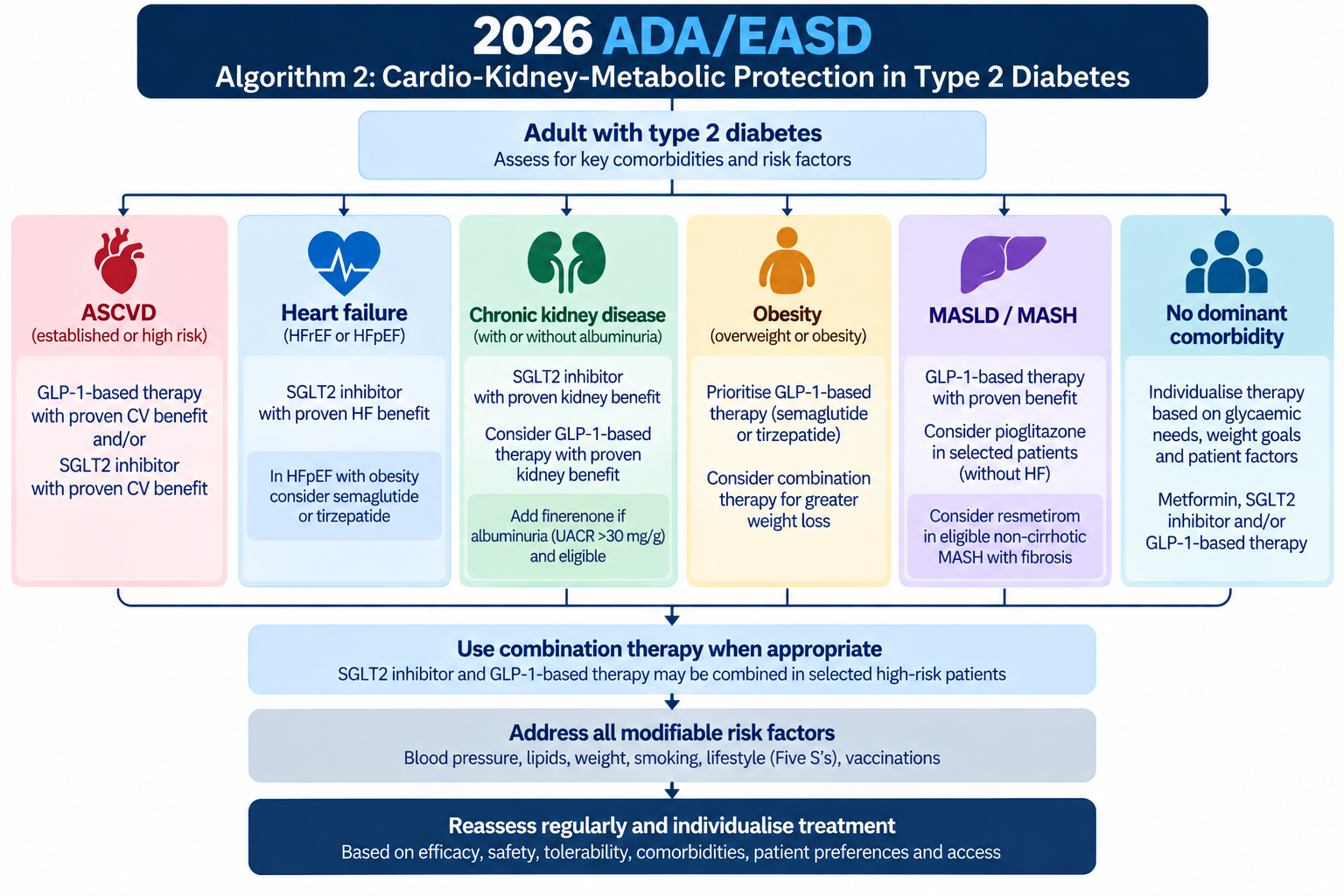
The presence of cardiovascular disease, heart failure, chronic kidney disease, obesity or liver disease should directly influence medication selection.
Atherosclerotic Cardiovascular Disease
For patients with established ASCVD, treatment should include a GLP-1-based therapy and/or an SGLT2 inhibitor with demonstrated cardiovascular benefit.
GLP-1-based therapies with proven benefit reduce major adverse cardiovascular events (MACE), while SGLT2 inhibitors provide cardiovascular, heart failure and kidney protection.
For individuals without established cardiovascular disease but with multiple cardiovascular risk factors, these therapies may also be considered, although absolute benefits are generally smaller.
Combination therapy may provide additional benefits in selected high-risk patients.
Heart Failure
SGLT2 inhibitors are recommended for patients with type 2 diabetes and heart failure, regardless of whether ejection fraction is reduced or preserved.
Their benefits include reducing heart failure events and improving cardiovascular and kidney outcomes.
For patients with HFpEF and obesity, semaglutide or tirzepatide should be considered to improve heart failure symptoms and functional status.
Finerenone also has an established role in selected patients with mildly reduced or preserved ejection fraction.
Chronic Kidney Disease
Kidney protection is a major priority in the 2026 consensus.
SGLT2 inhibitors form the foundation of treatment for eligible patients with type 2 diabetes and CKD, irrespective of albuminuria.
GLP-1-based therapy with proven kidney benefit should also be considered. Semaglutide has demonstrated reductions in CKD progression.
For patients with albuminuric CKD, finerenone provides additional cardiovascular and kidney protection.
| Clinical situation | Recommended approach |
|---|---|
| Type 2 diabetes with CKD | SGLT2 inhibitor with proven kidney benefit |
| CKD requiring additional protection | GLP-1-based therapy with proven benefit |
| CKD with UACR >30 mg/g | Finerenone when eligible |
| CKD with cardiovascular disease or heart failure | Consider early combination treatment |
Finerenone is generally considered when eGFR is above 25 mL/min/1.73 m², with appropriate serum potassium assessment and monitoring.
SGLT2 inhibitors should generally be continued until kidney replacement therapy becomes indicated, subject to clinical circumstances and prescribing recommendations.
3. Weight Management as a Therapeutic Priority
The consensus places greater emphasis on weight reduction as a central component of type 2 diabetes management.
Weight loss can improve insulin sensitivity, glycaemic control, cardiovascular risk factors and obesity-related complications.
Weight-Loss Targets
| Weight reduction | Expected clinical benefits |
|---|---|
| ≥5% | Clinically meaningful metabolic improvement |
| 10–15% | Greater improvement in glycaemic control and cardiometabolic risk |
| Substantial sustained weight loss | Increased potential for diabetes remission |
Pharmacological Weight Management
GLP-1-based therapies are particularly important for patients with overweight or obesity.
Semaglutide and tirzepatide provide substantial reductions in body weight alongside improvements in glycaemic control.
Tirzepatide generally produces greater weight reduction than conventional GLP-1 receptor agonists.
Treatment should be individualised according to efficacy, adverse effects, patient preferences and access.
Metabolic Surgery
Metabolic surgery remains an important option for appropriately selected patients with type 2 diabetes.
The consensus discusses consideration of surgery at lower BMI thresholds than historically used.
- BMI ≥30 kg/m²: Surgery may be considered.
- BMI ≥35 kg/m²: Stronger consideration is appropriate.
- Asian ancestry: Corresponding thresholds of approximately 27.5 and 32.5 kg/m².
Decisions should consider surgical suitability, metabolic risk, patient preferences and access to multidisciplinary follow-up.
4. Management of MASLD and MASH
Metabolic dysfunction-associated steatotic liver disease (MASLD) and metabolic dysfunction-associated steatohepatitis (MASH) are important comorbidities in type 2 diabetes.
Weight reduction remains the foundation of treatment.
For patients with obesity, type 2 diabetes and MASLD, GLP-1-based therapy with proven benefit is recommended.
For biopsy-proven MASH, GLP-1-based treatment is preferred, while pioglitazone or tirzepatide may also be considered.
Pioglitazone can improve liver-related outcomes but requires careful assessment of weight gain, fluid retention, heart failure and fracture risk.
SGLT2 inhibitors should be continued when indicated for glycaemic, cardiovascular or kidney protection, but should not be selected primarily for liver disease modification.
Patients with moderate or advanced liver fibrosis should undergo specialist assessment. Resmetirom may be considered in eligible patients with non-cirrhotic MASH and significant fibrosis.
In decompensated cirrhosis, insulin remains the preferred treatment for hyperglycaemia.
5. Obstructive Sleep Apnoea and Type 2 Diabetes
Obstructive sleep apnoea is highly prevalent among patients with type 2 diabetes, particularly in those with obesity.
Weight reduction is an important component of management.
Tirzepatide has demonstrated improvements in OSA severity, including reductions in the apnoea–hypopnoea index.
GLP-1 receptor agonists may also improve OSA-related outcomes through weight reduction.
For patients with obesity, type 2 diabetes and OSA, tirzepatide or a GLP-1 receptor agonist with proven benefit may be prioritised.
However, positive airway pressure therapy remains standard treatment for OSA when indicated. Weight-reducing medication should complement, rather than automatically replace, established OSA treatment.
6. Individualising Glycaemic and Cardiovascular Targets
Treatment targets should reflect age, comorbidities, frailty, hypoglycaemia risk, treatment burden and patient preferences.
| Parameter | General target |
|---|---|
| HbA1c | Approximately 6.5–7% for many non-pregnant adults |
| CGM time in range | >70% |
| CGM target range | 70–180 mg/dL |
| Blood pressure | Generally <130/80 mmHg |
| Weight reduction | Individualised; substantial loss may support disease modification |
A lower systolic blood pressure target may be appropriate in selected patients with high cardiovascular or kidney risk when safely achievable.
Less stringent glycaemic targets may be appropriate for patients with frailty, significant hypoglycaemia risk or limited life expectancy.
7. Lifestyle Management: The Five S's
The consensus emphasises lifestyle interventions across the entire 24-hour period.
The Five S's provide a practical framework for incorporating physical activity, reducing sedentary behaviour and improving sleep.
| Component | Practical recommendation |
|---|---|
| Standing | Interrupt prolonged sitting regularly |
| Stepping | Progressively increase daily walking and movement |
| Sweating | Aim for ≥150 minutes of moderate-to-vigorous aerobic activity weekly |
| Strengthening | Perform resistance exercise 2–3 times weekly |
| Sleeping | Aim for approximately 7–8 hours of good-quality sleep |
Resistance training is particularly important during weight reduction to preserve skeletal muscle mass and physical function.
Lifestyle management should accompany pharmacological therapy rather than being treated as a prerequisite that delays indicated organ-protective medication.
8. Pharmacological Management Algorithm
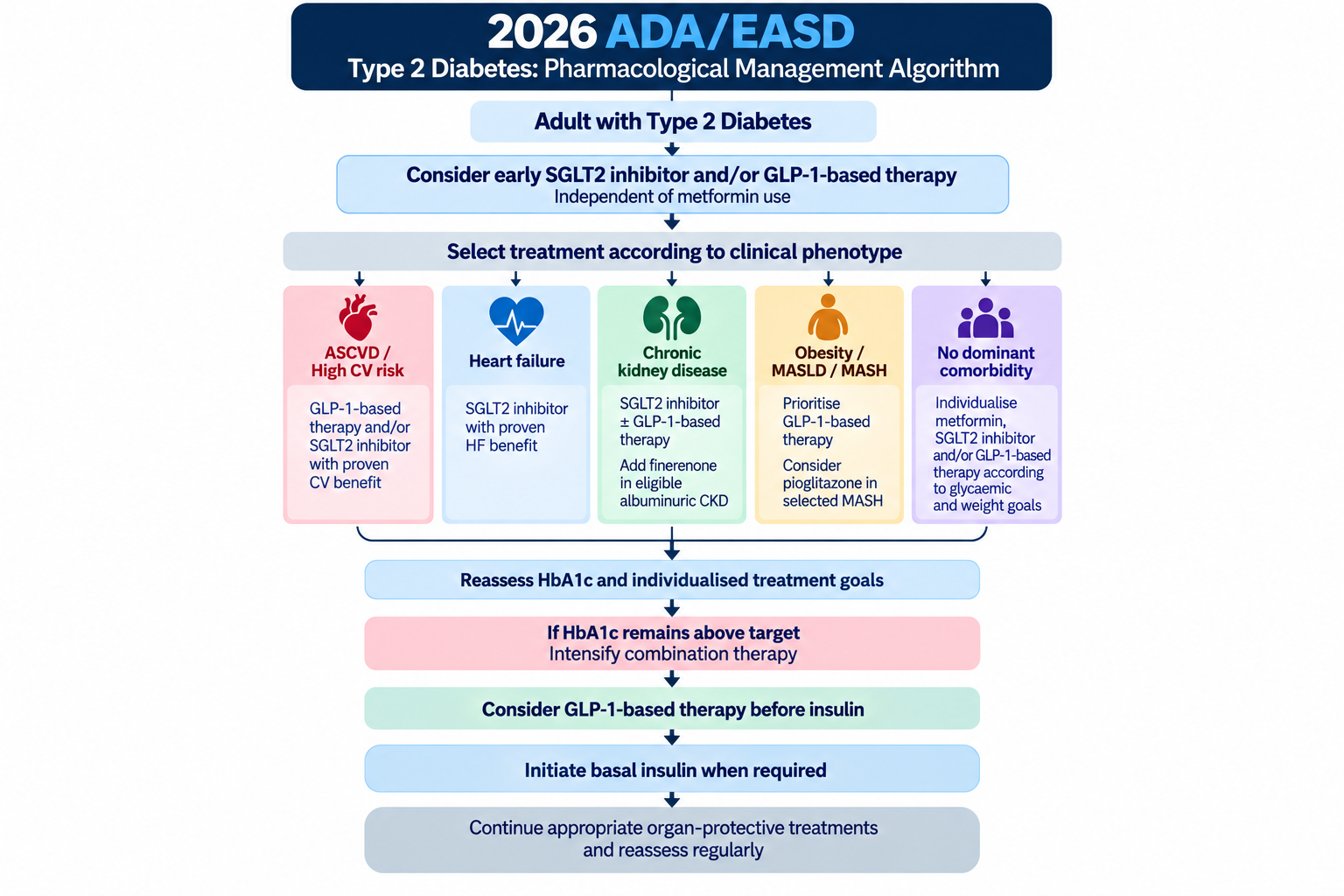
The following pathway translates the consensus recommendations into a practical prescribing framework.
Initial Treatment
Adult with type 2 diabetes
↓
Consider early SGLT2 inhibitor and/or GLP-1-based therapy
Selection is based on cardiovascular and kidney risk, weight-management goals, glycaemic requirements, tolerability and access.
↓
Select According to Clinical Phenotype
| Clinical phenotype | Pharmacological treatment |
|---|---|
| ASCVD/high cardiovascular risk | GLP-1-based therapy and/or SGLT2 inhibitor with proven benefit |
| Heart failure | SGLT2 inhibitor with proven HF benefit |
| Chronic kidney disease | SGLT2 inhibitor and/or GLP-1-based therapy with proven kidney benefit |
| Albuminuric CKD | Consider adding finerenone |
| Obesity | Prioritise highly effective weight-lowering therapies |
| MASLD/MASH | GLP-1-based therapy; consider pioglitazone in selected patients |
| No dominant comorbidity | Individualise metformin, SGLT2 inhibitor and/or GLP-1-based therapy |
↓
Reassess HbA1c and individualised treatment goals
↓
If glycaemic targets remain unmet:
Intensify combination glucose-lowering therapy.
↓
Consider GLP-1-based therapy before insulin, when clinically appropriate.
↓
Initiate basal insulin when required.
Continue appropriate organ-protective therapies.
The algorithm is not a rigid sequence. Multiple pathways may apply simultaneously, and treatment should be reviewed regularly.
9. Additional Glucose-Lowering Medications
Although newer therapies have expanded treatment options, traditional glucose-lowering medications retain important roles.
| Drug class | Advantages | Important limitations |
|---|---|---|
| Metformin | Effective, inexpensive, low hypoglycaemia risk | Gastrointestinal intolerance, B12 deficiency, kidney function restrictions |
| SGLT2 inhibitors | Cardiovascular, HF and kidney protection; weight reduction | Genital infections, volume depletion, ketoacidosis risk |
| GLP-1 RAs | Strong glycaemic and weight effects; selected agents provide organ protection | Gastrointestinal effects, cost, relevant contraindications |
| Tirzepatide | Very high glycaemic and weight-loss efficacy | Gastrointestinal effects, cost and availability |
| DPP-4 inhibitors | Low hypoglycaemia risk, generally well tolerated | Moderate efficacy; no proven cardiovascular risk reduction |
| Pioglitazone | Effective glucose lowering; potential MASH benefit | Weight gain, fluid retention, HF and fracture risks |
| Sulphonylureas | Effective and inexpensive | Hypoglycaemia, weight gain |
| Insulin | Powerful glucose lowering | Hypoglycaemia, weight gain, monitoring requirements |
Drug selection should balance clinical efficacy against adverse effects, comorbidities, patient preferences and affordability.
10. Insulin Initiation and Diabetes Technology
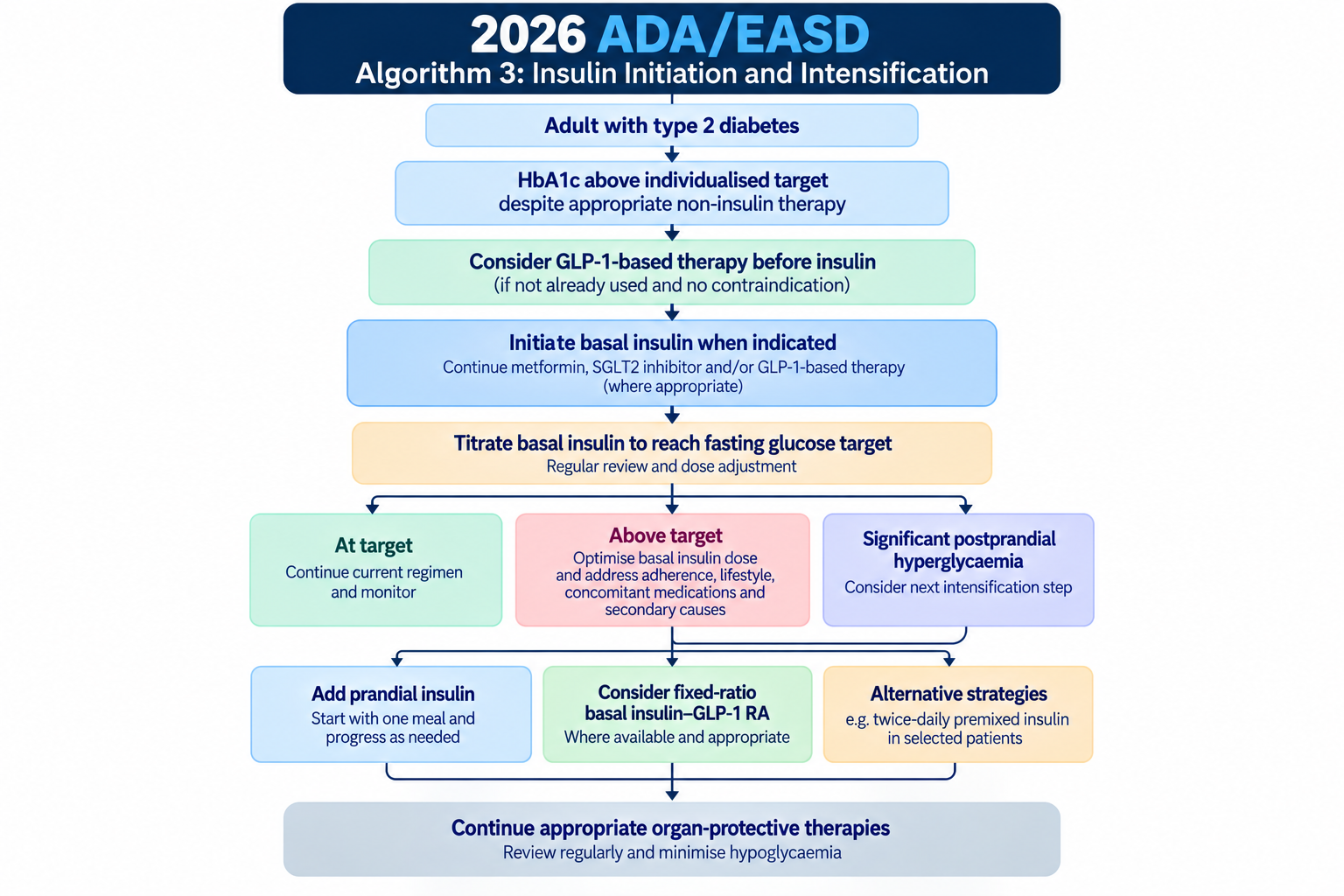
Insulin remains essential for patients who require additional glucose lowering despite appropriate non-insulin treatment.
When insulin is indicated, the preferred initial regimen is generally basal insulin, usually after considering GLP-1-based therapy.
Basal insulin analogues are preferred over NPH insulin when appropriate because of their lower risk of nocturnal hypoglycaemia.
When initiating insulin:
- Review and optimise lifestyle interventions.
- Provide structured insulin education.
- Continue appropriate SGLT2 inhibitors and GLP-1-based therapies.
- Review or discontinue sulphonylureas to reduce hypoglycaemia.
- Individualise insulin titration and glucose monitoring.
Further intensification may include prandial insulin, fixed-ratio basal insulin–GLP-1 RA combinations or other appropriate insulin regimens.
Continuous glucose monitoring can improve understanding of glycaemic patterns and support treatment adjustments, particularly in insulin-treated patients.
Once-weekly basal insulin formulations offer additional options in regions where they are approved and available.
11. Special Populations and Treatment Safety
Early-Onset Type 2 Diabetes
Early-onset disease is associated with a longer lifetime exposure to hyperglycaemia and cardiometabolic risk.
Early intervention, weight management and appropriate pharmacological therapy are particularly important.
Older Adults and Frailty
Treatment should balance long-term benefits against hypoglycaemia, treatment burden and adverse effects.
Sulphonylureas and insulin require particular caution in patients with frailty or increased hypoglycaemia risk.
Deintensification should be considered when treatment risks outweigh expected benefits.
Treatment-Resistant Hyperglycaemia
Persistent hyperglycaemia despite multiple medications should prompt reassessment of adherence, treatment adequacy and diabetes classification.
Targeted screening for secondary causes, including hypercortisolism, may be appropriate in selected patients.
12. Implementing the 2026 Consensus in Clinical Practice
The updated approach requires regular assessment of glycaemic control, cardiovascular and kidney status, body weight, medication tolerability and patient preferences.
Treatment should be modified proactively rather than waiting for complications or substantial deterioration in HbA1c.
Clinicians should also consider affordability and access, particularly where newer medications are not readily available.
The most appropriate regimen is one that achieves meaningful clinical benefit while remaining safe, acceptable and sustainable for the individual patient.
Conclusion
The 2026 ADA/EASD consensus represents a shift towards earlier, personalised and comprehensive management of type 2 diabetes.
SGLT2 inhibitors and GLP-1-based therapies now occupy a central role because of their effects beyond glucose lowering.
Cardiovascular disease, heart failure, chronic kidney disease, obesity and liver disease should guide treatment selection from the outset.
Lifestyle modification, weight management, appropriate pharmacotherapy and regular treatment reassessment remain essential components of care.
The central objective is no longer simply to achieve an HbA1c target, but to prevent long-term complications while improving health, function and quality of life.
Original Guideline
Davies MJ, Aroda VR, Bajaj M, et al. (2026). Management of Type 2 Diabetes, 2026: A Consensus Report by the American Diabetes Association (ADA) and the European Association for the Study of Diabetes (EASD). Diabetes Care.
DOI: 10.2337/dci26-0141